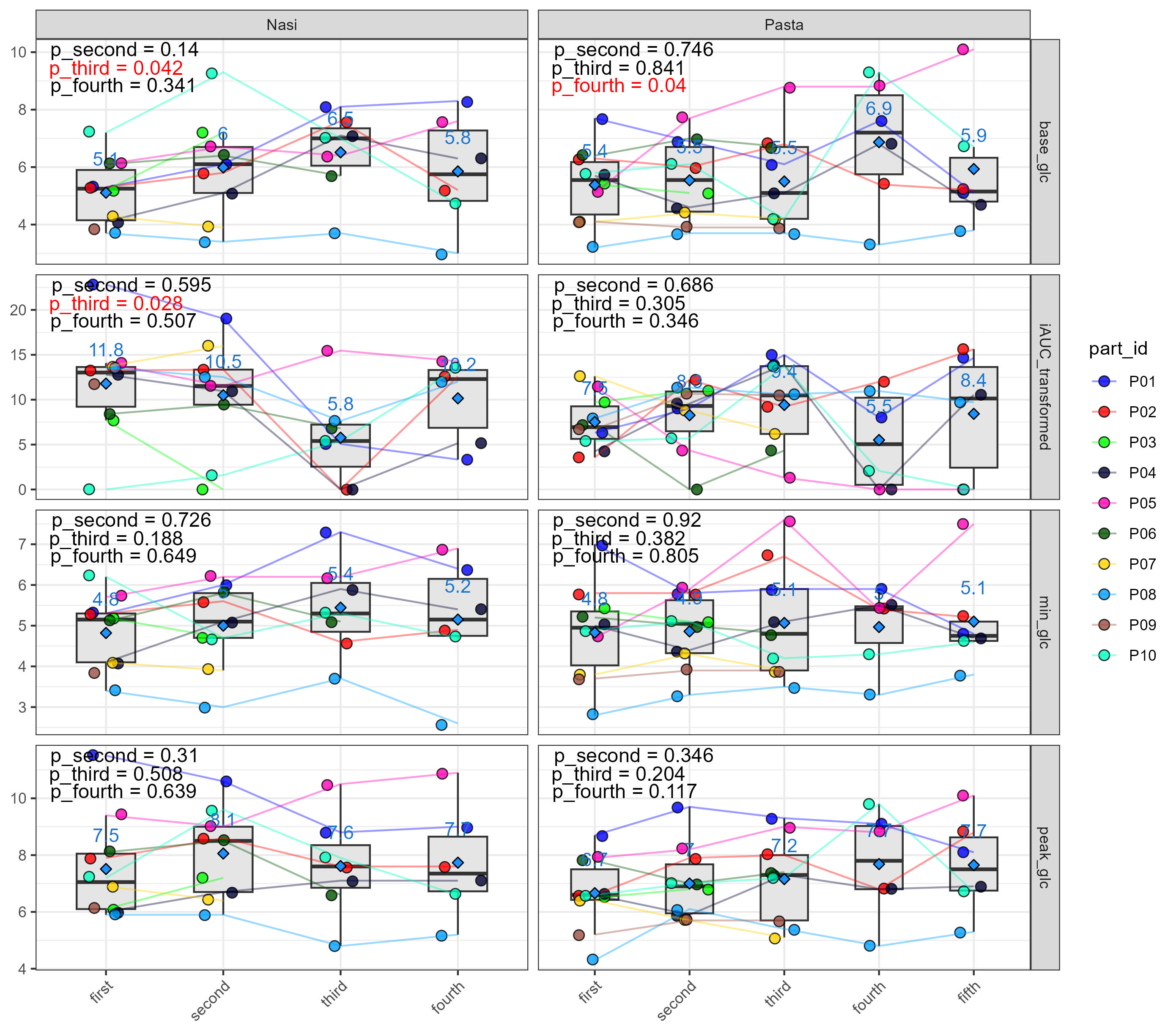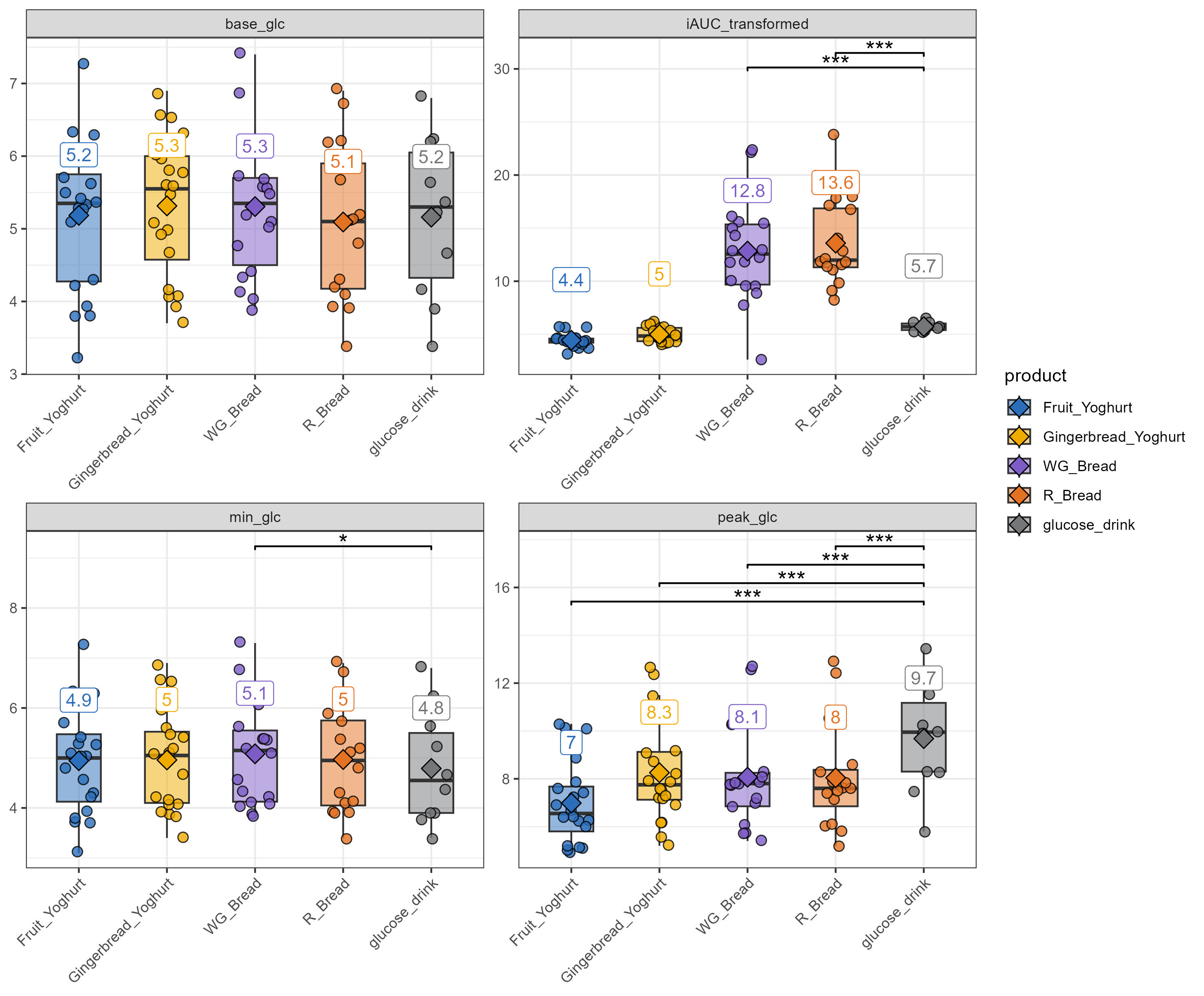


Project overview
This analysis was conducted as part of the broader GLYSIMI study, which investigates the role of the human small intestinal microbiota in shaping postprandial glucose responses (PPGR) to standardized meals. For the purpose of portfolio data from 10 participants are presented.
Aim
to assess
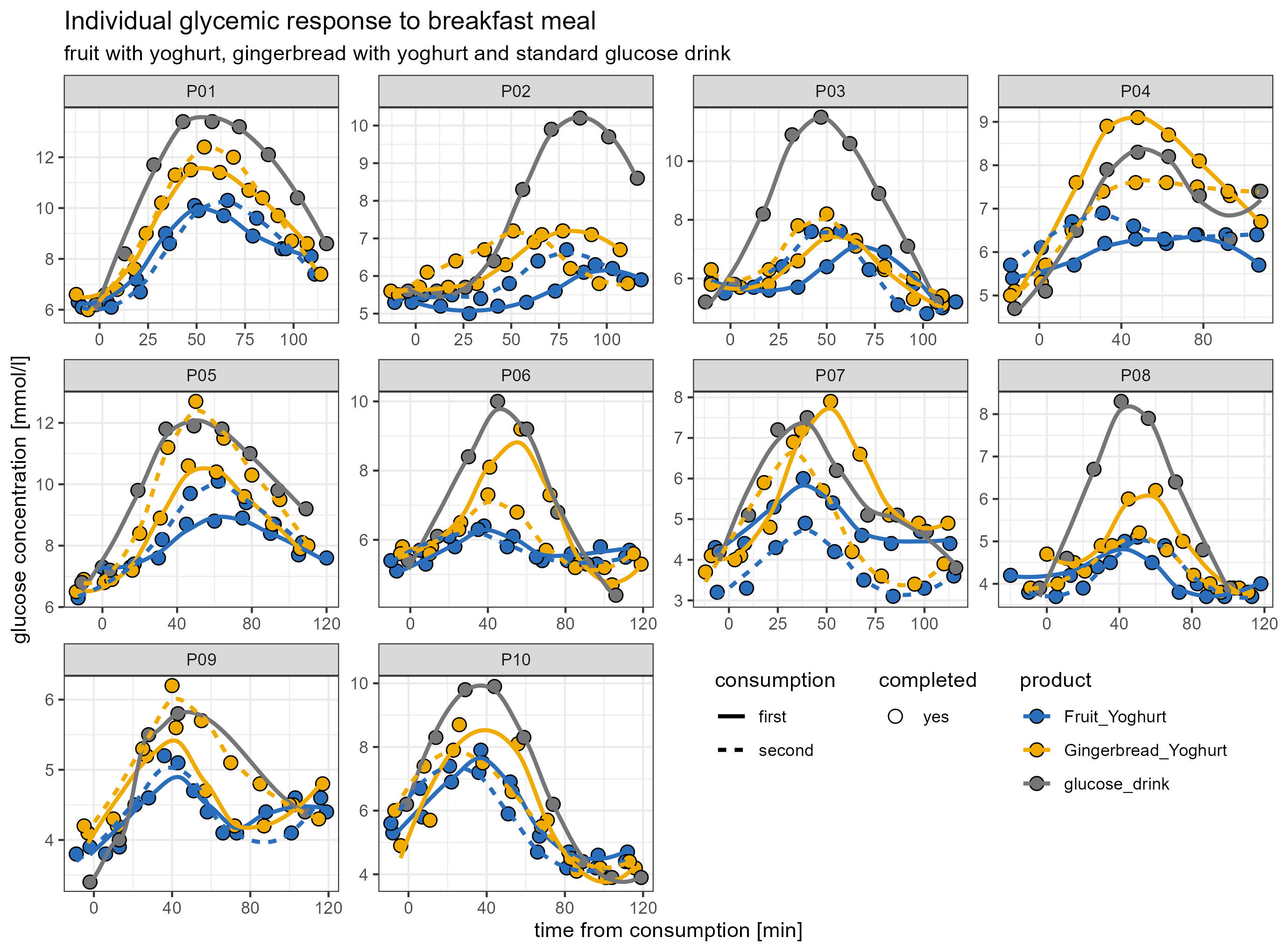
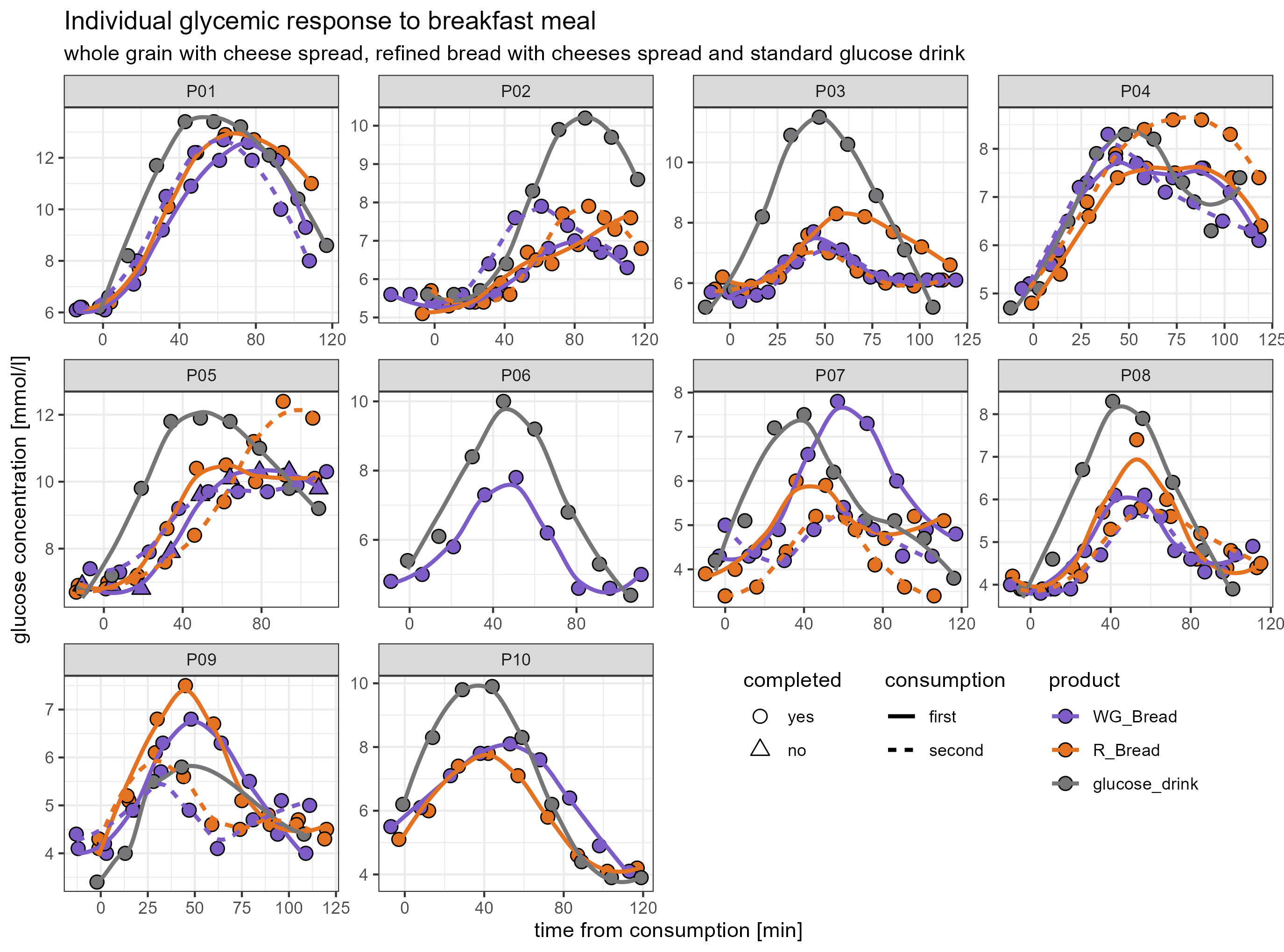
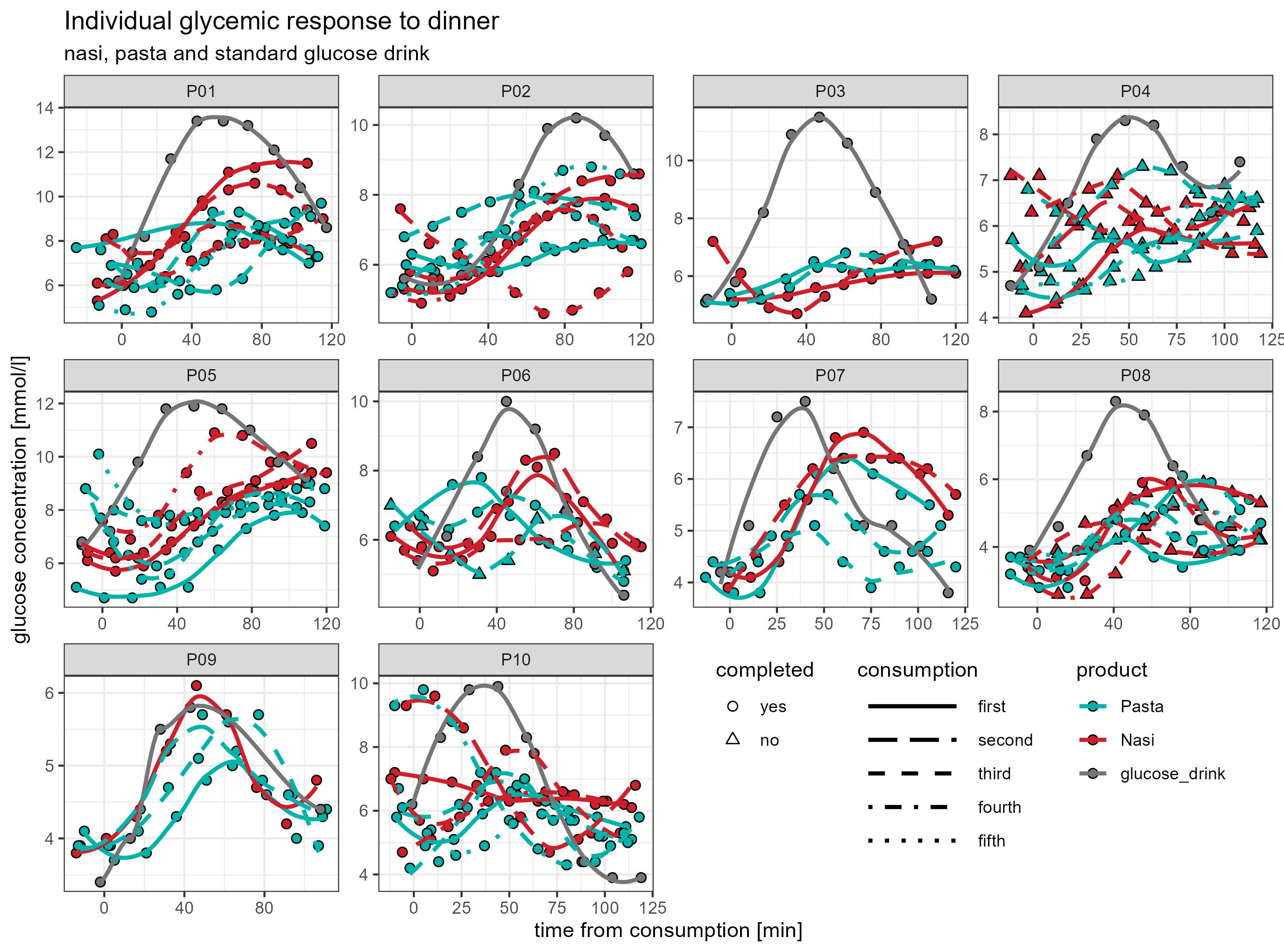
- the consistency of glycaemic responses within individuals to repeated consumption of the same meal, and
- difference in responses to different food products across participants.
Key insights
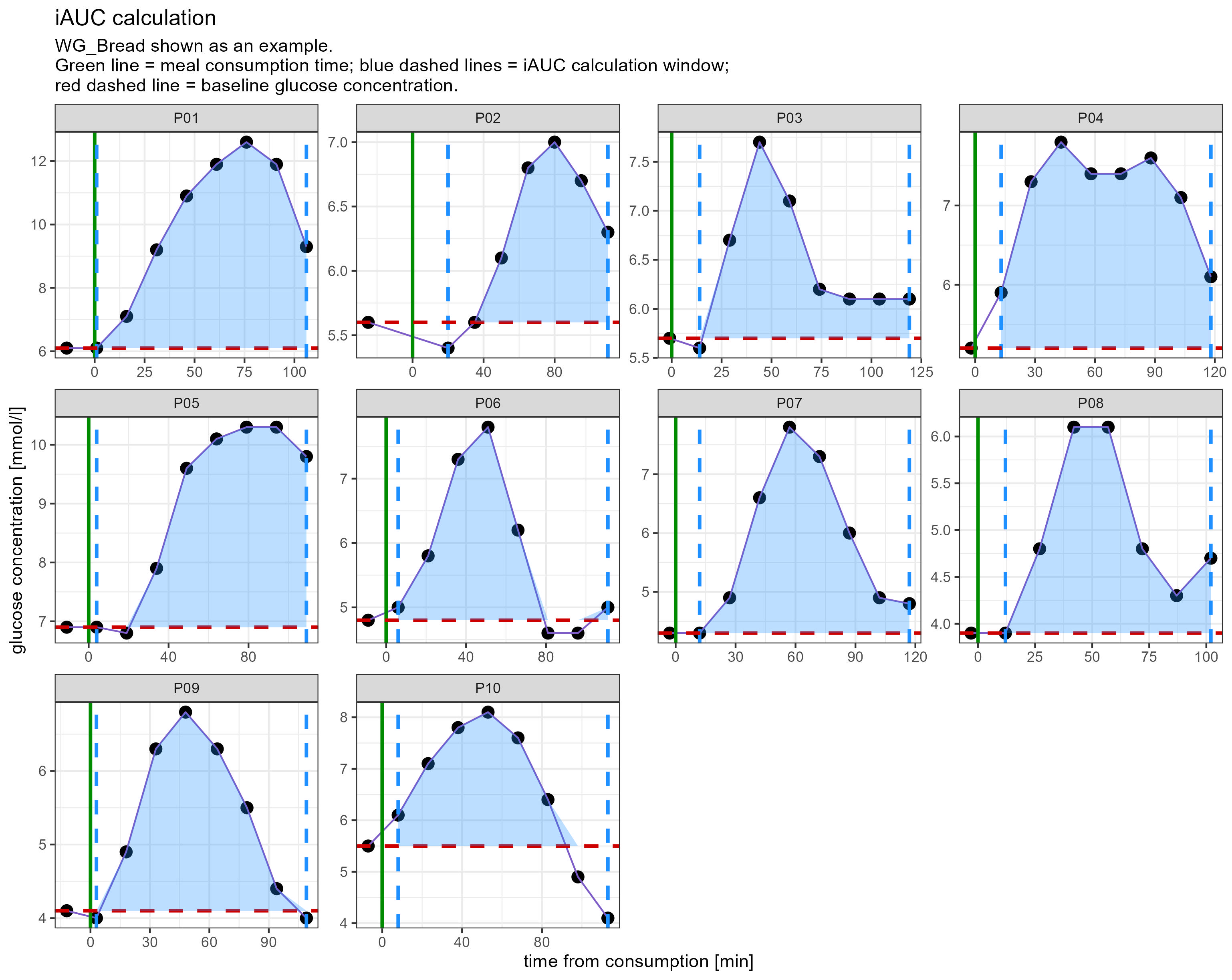
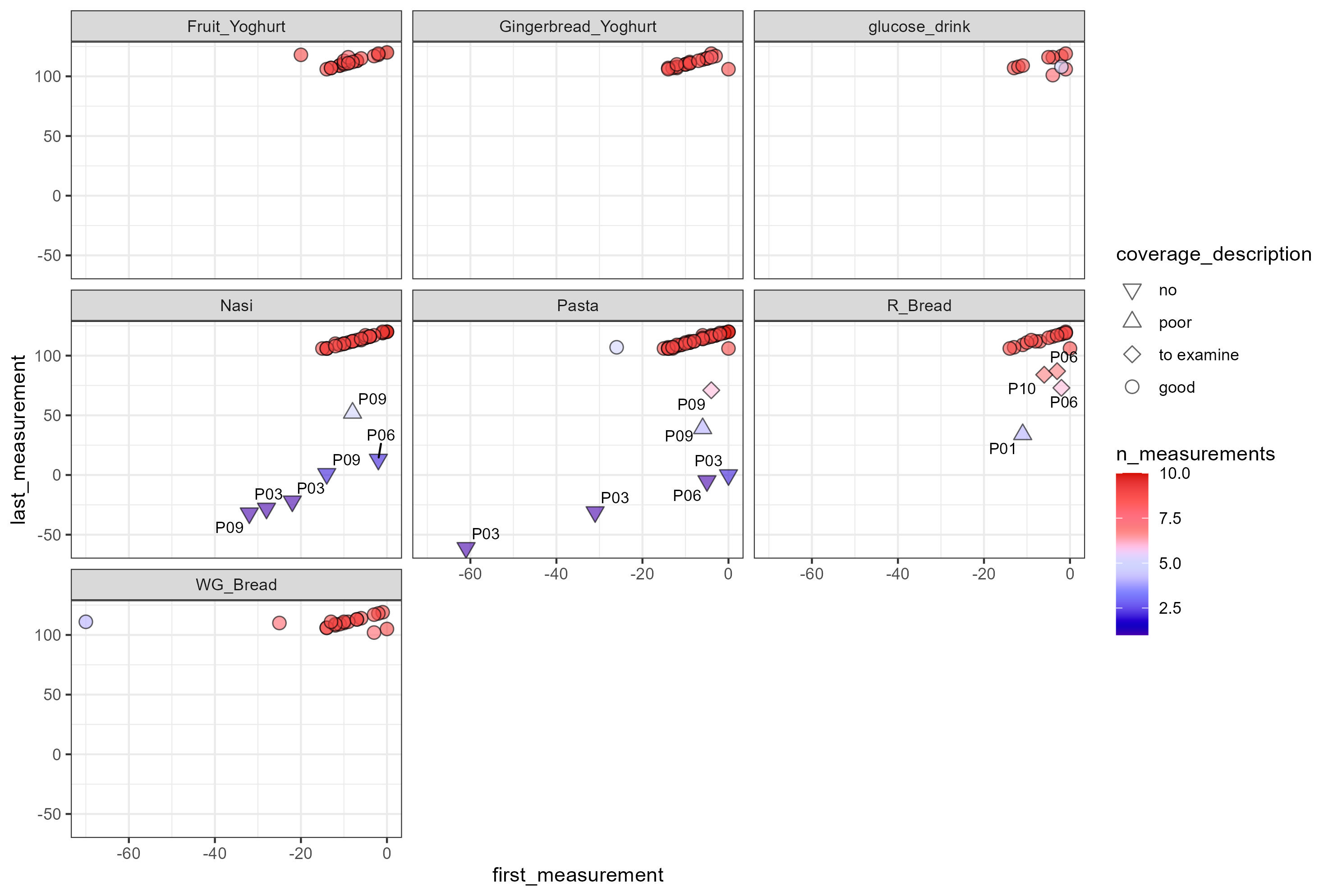
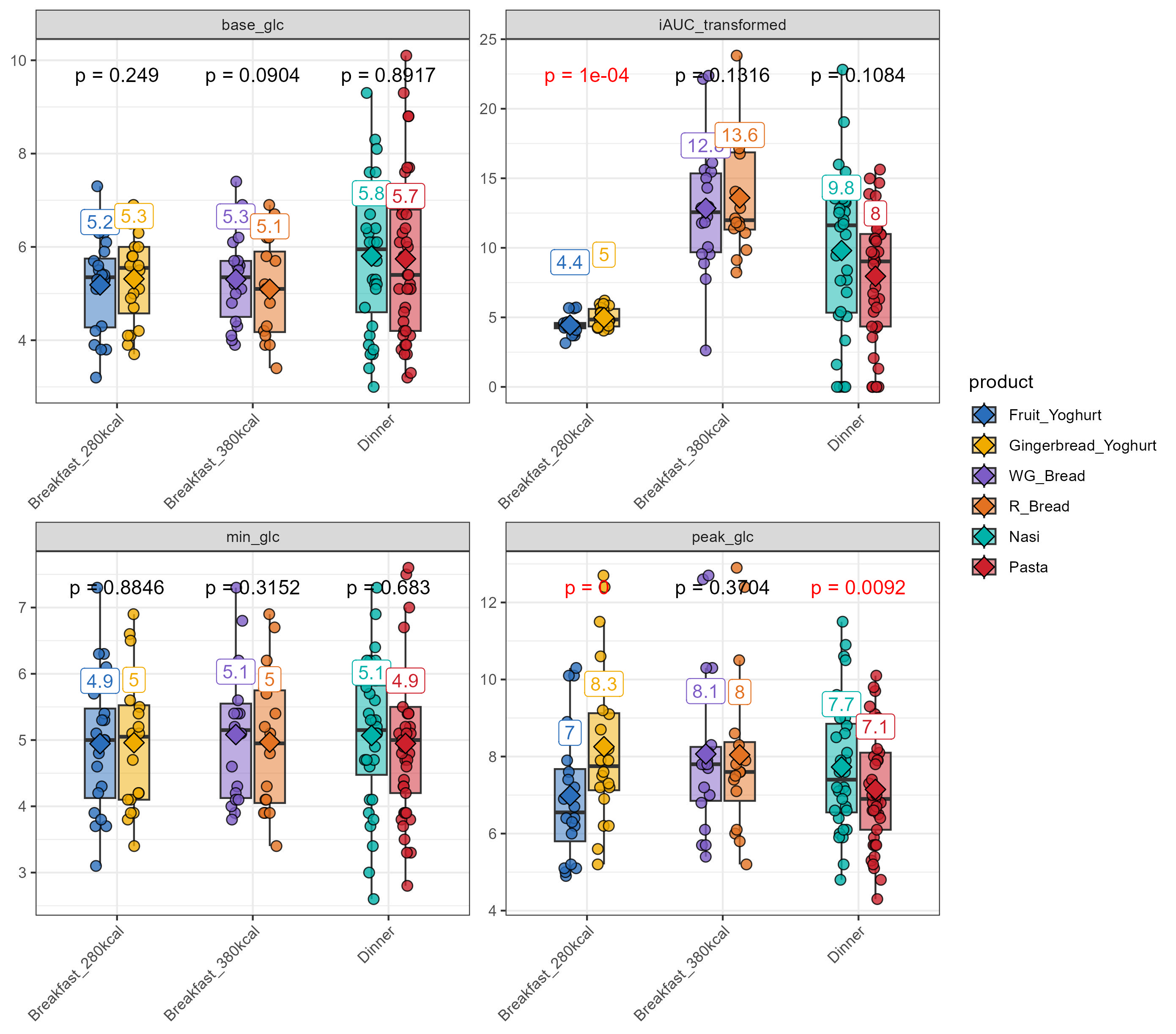
- Although postprandial glycemic curves over the 2-hour period showed minor visual differences, most derived glycemic parameters (peak glucose, minimum glucose, and iAUC) were not significantly different between breakfast meals; an exception was observed for rice (nasi)-based meals.
- Gingerbread with yoghurt elicited a significantly higher glycemic response compared to fruit with yoghurt, as reflected by both iAUC and peak glucose.
- Nasi consumption resulted in a significantly higher peak glucose compared to pasta, indicating a stronger acute glycemic excursion despite similar overall exposure.
- The glucose drink produced the highest peak glucose concentration; however, bread-based meals showed a higher overall glycemic exposure (iAUC), indicating a more prolonged postprandial response despite lower peak values and faster return toward baseline.
- Considerable inter-individual variability in glycemic responses was observed, which may be influenced by factors such as metabolic health, age, genetic background, and gut microbiome composition.